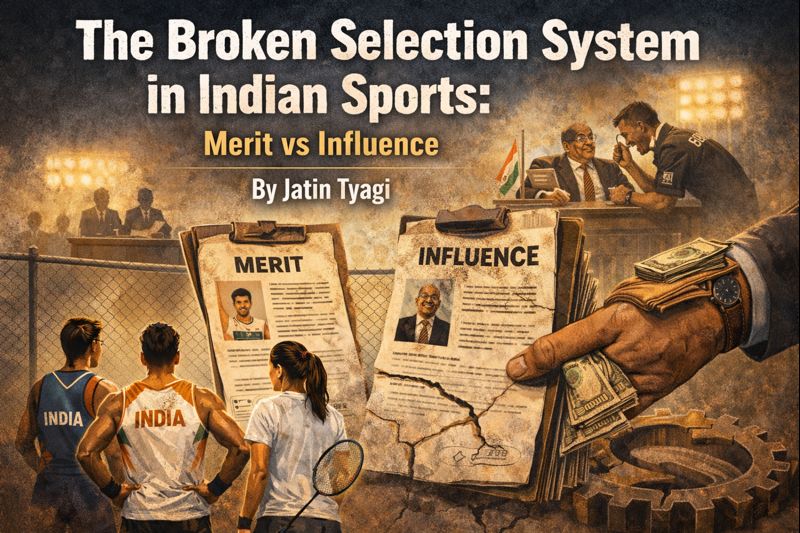
Indian sport claims to reward talent.
But behind closed doors, influence often speaks louder than merit.
Selection is the heartbeat of an athlete’s career.
It decides who gets opportunities, exposure, funding, and belief.
Yet, for countless Indian athletes, selection is not a transparent process — it is an anxious waiting room filled with uncertainty, silence, and unanswered questions.
This article is not written to create controversy.
It is written to confront a reality many athletes live with but rarely voice.
In Indian sports, merit is celebrated publicly — but influence quietly decides outcomes.
Why I Am Writing This
Over the years, I have interacted with athletes across age groups, sports, and competitive levels. Some stories differ in detail, but the emotion remains the same.
- Confusion after unexplained exclusion
- Silence from authorities when questions are asked
- Self-doubt creeping in despite consistent performance
- Parents wondering what more their child could possibly do
These experiences are not isolated failures.
They point to a systemic fracture in how selection is understood, executed, and defended.
As a sports reformer, I believe uncomfortable conversations are necessary for meaningful change.
What Selection Should Represent
At its core, selection should stand for:
- Fair evaluation
- Equal opportunity
- Performance-based decision-making
- Trust in the system
For an athlete, selection is validation — not ego, but acknowledgment of effort, discipline, and sacrifice.
When this process loses credibility, sport loses its moral foundation.
Where the System Breaks
- Ambiguous Criteria
In many sports, selection criteria are:
- Vaguely defined
- Poorly communicated
- Inconsistently applied
Athletes often don’t know:
- What metrics matter most
- How performances are weighted
- Why one athlete is preferred over another
When criteria are unclear, discretion becomes power.
- Influence Masquerading as Discretion
Influence doesn’t always look obvious.
It appears as:
- Familiarity
- Recommendations
- Proximity to decision-makers
- Institutional preference
Athletes without access feel the gap — even if they can’t prove it.
Merit becomes negotiable.
Trust erodes silently.
- The Silence After Rejection
One of the most damaging aspects of the selection system is what happens after rejection.
Most athletes receive:
- No explanation
- No feedback
- No development roadmap
Silence replaces guidance.
Athletes are left to internalize failure without understanding it.
The Psychological Cost of a Broken System
Unfair or unexplained selection decisions don’t just end opportunities — they reshape identities.
Athletes begin to:
- Doubt their ability
- Overtrain to exhaustion
- Lose confidence
- Withdraw emotionally
Many quit not because they lack talent, but because they lose faith in the process.
This is silent talent erosion.
Parents: Witnesses Without Power
Parents invest time, money, and belief.
They watch their children perform consistently, only to face rejection without reason.
Most parents:
- Fear questioning authority
- Worry about retaliation
- Feel helpless
A system that intimidates parents into silence cannot claim fairness.
Why This Problem Persists
The selection system remains broken because:
- There is no independent oversight
- Decision-makers are rarely accountable
- Appeals are internal and ineffective
- Transparency is optional, not mandatory
Power concentrates.
Athlete voices diminish.
This Is Not an Attack on Officials
Let me be clear.
Many selectors and officials work with integrity.
But integrity cannot survive inside flawed structures forever.
Good intentions cannot replace:
- Transparent systems
- Documented decisions
- Independent review
Reform is about strengthening institutions — not vilifying individuals.
My Vision: Merit That Is Visible and Defensible
I envision a selection system where:
- Criteria are published and standardized
- Performance data is documented
- Selection decisions are explained
- Feedback is mandatory
- Appeals are independent
- Athletes are treated with dignity
Merit must not only exist — it must be seen, recorded, and defended.
What a Fair Selection System Looks Like
- Clear benchmarks before trials
- Objective scoring wherever possible
- Multi-member, diverse selection panels
- Written justification for decisions
- Time-bound feedback to athletes
- Protection for those who question decisions
Transparency doesn’t weaken authority.
It strengthens legitimacy.
Message to Young Athletes
Your worth is not defined by one selection list.
But you deserve:
- Fair evaluation
- Honest feedback
- A system that respects effort
Never confuse systemic failure with personal failure.
Message to Coaches
You are often the bridge between athletes and institutions.
Advocate for:
- Clarity
- Fairness
- Athlete development
A coach who protects athletes from unfair systems builds trust beyond results.
Message to Officials and Selectors
Selection is power.
Use it responsibly.
Every unexplained decision:
- Creates doubt
- Breeds resentment
- Pushes talent away
True authority is transparent.
Message to Policymakers
If India wants sustainable sporting success, selection reform must be prioritized.
This requires:
- National selection guidelines
- Independent grievance bodies
- Regular audits
- Athlete representation
Meritocracy cannot survive without structural protection.
Why Reform Is Urgent
A broken selection system:
- Discourages grassroots talent
- Rewards access over effort
- Damages international credibility
India does not lack talent.
It lacks trustworthy pathways.
My Commitment as a Sports Reformer
As Jatin Tyagi, I commit to:
- Advocating transparency in selection processes
- Supporting athlete rights and dignity
- Challenging influence-driven decision-making
- Promoting systems where merit truly matters
Sport should inspire belief — not suspicion.
A Defining Quote
“When merit must compete with influence, talent doesn’t lose — trust does.”
— Jatin Tyagi
Conclusion: Merit Must Win Beyond Slogans
Indian sport speaks the language of meritocracy.
It must now practice it.
Selection should never feel like a gamble or a favour.
It should feel like a fair outcome of honest effort.
Until merit becomes undeniable, Indian sport will continue to lose not just athletes — but credibility.
About the Author
Jatin Tyagi is a sports reformer, activist, and social impact advocate committed to creating ethical, athlete-centered, and mentally resilient sports environments. His work emphasizes youth development, sports integrity, and lasting athlete well-being.
#MeritOverInfluence #SportsSelection #AthleteRights #SportsReformer #EthicalSports
#IndianSports #AthleteFirst #JatinTyagi #Activist #Aware