Emergencies can strike without warning—at home, school, workplaces, sports fields, or even on the road. Often, the difference between a minor incident and a life-threatening situation is immediate, correct response. This is where basic first aid becomes not just important but essential.
As a former footballer, sports reformer, national youth icon, and mentor, I have witnessed countless situations where timely first aid saved lives. From sports injuries to sudden medical emergencies, basic first aid knowledge equips individuals to act confidently, reduce harm, and sometimes even save lives before professional medical help arrives.
This article serves as a complete guide to basic first aid, blending practical steps, personal insights, and actionable strategies, while emphasizing the role of youth, communities, and institutions in fostering a culture of preparedness and care.
Why Basic First Aid Matters
- Immediate Response Saves Lives: Quick action can prevent minor injuries from becoming severe and can stabilize critical conditions before professional help arrives.
- Reduces Recovery Time: Proper first aid minimizes complications, promoting faster recovery.
- Builds Confidence: Knowing what to do during emergencies reduces panic and enables decisive action.
- Empowers Communities: Trained individuals become a frontline defence in schools, workplaces, sports events, and neighbourhoods.
- Promotes Responsibility: First aid knowledge instils empathy, civic responsibility, and proactive thinking.
Personal Insight: During my football career, I noticed how minor injuries treated immediately on the field prevented long-term downtime, teaching me the real-life importance of first aid.
Core Principles of Basic First Aid
- Assess the Situation: Before rushing to help, ensure your safety first. Check for hazards like traffic, fire, electrical risks, or unsafe structures.
- Stay Calm: Panic can worsen situations. A calm demeanour reassures the injured person and allows for better judgment.
- Call for Help: Contact emergency services immediately if the injury is severe, life-threatening, or beyond your ability to manage.
- Prioritize Care: Follow the ABCs of first aid: Airway, Breathing, and Circulation. Ensure the injured person’s vital signs are stable.
- Provide Care Within Your Knowledge: Avoid attempting procedures you’re not trained for—basic first aid is about stabilization and comfort, not complex medical interventions.
Essential First Aid Skills Everyone Should Know
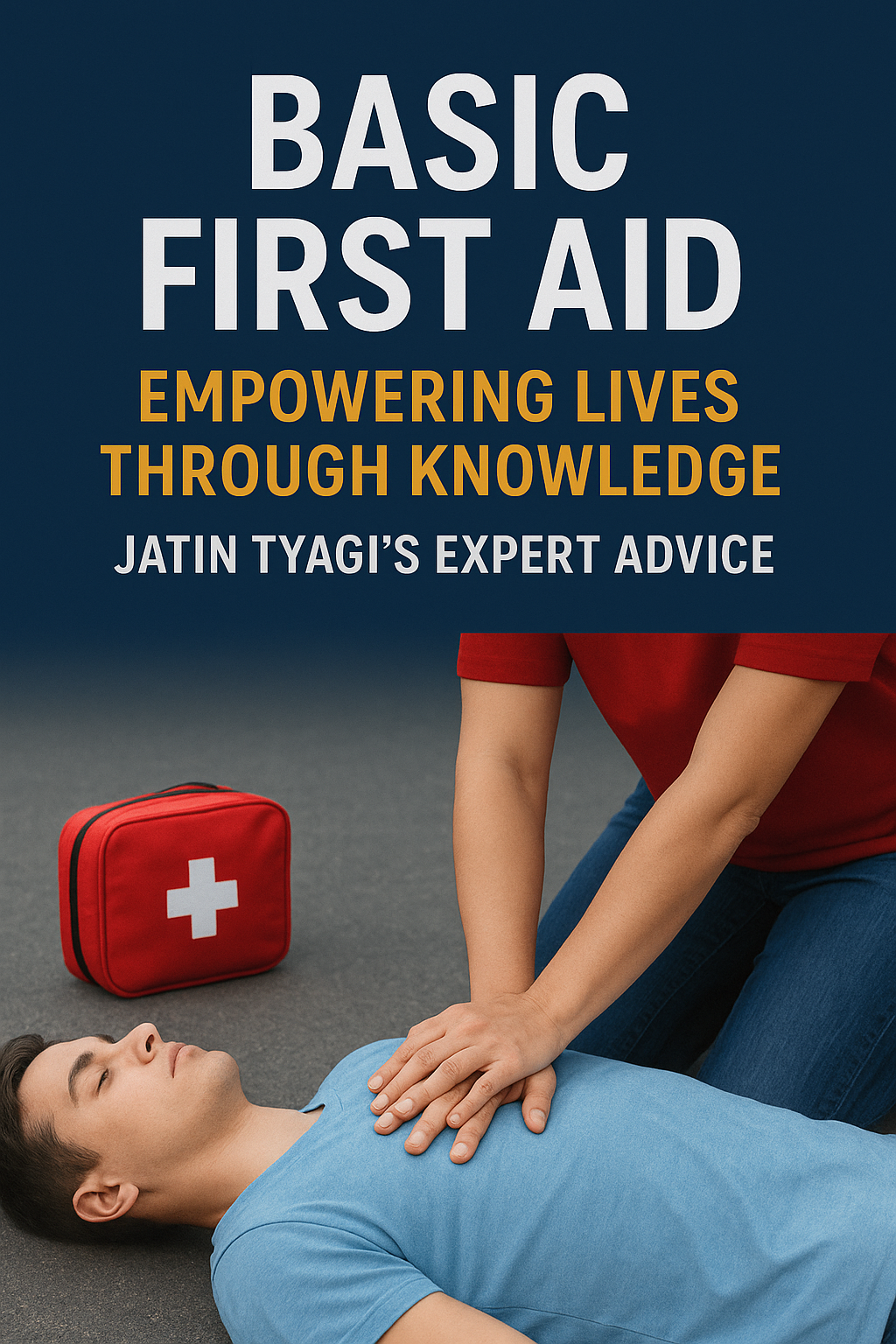
- CPR (Cardiopulmonary Resuscitation)
- Used when a person’s heart stops or they stop breathing.
- Key steps:
- Check responsiveness and breathing.
- Call emergency services.
- Perform chest compressions at a rate of 100–120 per minute.
- Use rescue breaths if trained.
Tip: Hands-only CPR is effective if you are not confident with rescue breaths.
- Bleeding and Wound Care
- Apply direct pressure on the wound to stop bleeding.
- Elevate the injured limb if possible.
- Clean minor cuts with water and antiseptic.
- Cover with sterile bandages.
- Do not remove embedded objects; stabilize and seek professional help.
- Burns and Scalds
- Cool the burn with running water for 15–20 minutes immediately.
- Avoid ice or oily substances.
- Cover with sterile, non-stick dressings.
- For severe burns, call emergency services immediately.
- Fractures and Sprains
- Keep the injured area immobilized.
- Use splints or supports to stabilize fractures.
- Apply ice packs for swelling and pain relief.
- Avoid moving the injured person unless necessary for safety.
- Choking and Airway Obstruction
- For conscious adults: Heimlich Maneuver (abdominal thrusts) can dislodge the obstruction.
- For infants: back blows and chest thrusts are recommended.
- Call emergency services if obstruction persists.
- Heart Attacks and Stroke Awareness
- Recognize symptoms: chest pain, shortness of breath, dizziness, numbness, facial droop, slurred speech.
- Call emergency services immediately.
- Keep the person calm, seated or lying down, and monitor vital signs until help arrives.
- Poisoning and Overdose
- Identify the substance and call poison control or emergency services.
- Avoid inducing vomiting unless advised by professionals.
- Keep the person comfortable and monitored.
- Heat Stroke and Hypothermia
- Heat Stroke: Move to shade, hydrate, and cool body with wet clothes or fan.
- Hypothermia: Warm the body gradually with blankets and warm fluids.
- Seek professional help in severe cases.
- Seizures
- Protect the person from injury by moving objects away.
- Do not restrain the person.
- After the seizure, ensure the person is on their side, maintain airway, and monitor breathing.
First Aid Kits: Essentials for Every Home, School, and Workplace
- Sterile gauze and bandages
- Adhesive tape and plasters
- Antiseptic wipes and cream
- Gloves (disposable)
- Scissors and tweezers
- Thermometer
- Pain relievers (like paracetamol)
- CPR mask or shield
- Ice packs
- Emergency contact numbers
Tip: Keep kits accessible and regularly updated. Train people in using all items effectively.
Role of Youth in First Aid
Youth play a crucial role in spreading awareness and providing basic first aid during emergencies:
- Peer Training: Schools and colleges can train students in CPR, wound care, and emergency response.
- Sports First Responders: During matches and training sessions, trained students can respond to injuries quickly.
- Community Awareness Campaigns: Youth can educate neighbours and community members about first aid basics.
- Digital First Aid Guides: Young volunteers can create online tutorials and apps to teach first aid practices widely.
Personal Insight: During my football days, youth teammates trained in first aid prevented injuries from escalating, showing the practical importance of these skills.
Training Programs and Certifications
- Indian Red Cross Society, St. John Ambulance, and other organizations offer certified first aid training.
- Online courses can supplement in-person training for theoretical knowledge.
- Schools and colleges should integrate first aid modules into their curriculum.
- Encourage refresher courses every 6–12 months to retain skills.
Quote from Jatin Tyagi
“Knowledge of first aid is not just a skill—it is a responsibility. Every citizen who can act in an emergency becomes a guardian of life, capable of turning crisis into hope.” – Jatin Tyagi
Vision for 2025
My vision is a India where every student, athlete, teacher, and youth volunteer is trained in basic first aid:
- Schools and colleges with mandatory first aid programs
- Community awareness drives led by trained youth
- Digital resources accessible nationwide for self-learning
- First aid champions recognized publicly, motivating others
- Reduced fatalities and injuries across sports, workplaces, and communities
Preparedness transforms communities. Empowered citizens are safer citizens.
Message: First Aid is Everyone’s Responsibility
- First aid is not just a medical skill; it is a societal skill.
- Whether at home, school, sports events, or public places, being ready saves lives.
- Encouraging youth and adults alike to learn, practice, and teach first aid strengthens the safety net of society.
Real-Life Impact of First Aid
- Sports Injuries: Immediate care prevented career-threatening injuries.
- Roadside Accidents: Quick application of basic first aid stabilized victims before ambulances arrived.
- Schools: Minor injuries and cuts were treated immediately, reducing panic and promoting safety culture.
- Community Emergencies: First aid-trained youth volunteers provided relief during 2024 floods and local accidents.
Lesson: First aid is not theoretical—it is practical, life-saving, and empowering.
Conclusion
Basic first aid is more than a skill—it is a lifeline for individuals, communities, and society. As a former footballer, sports reformer, and national youth icon, I urge every citizen, especially youth, to:
- Learn essential first aid skills
- Keep emergency kits ready at home, school, and workplace
- Engage in community awareness and peer training
- Act decisively and calmly during emergencies
- Promote a culture of preparedness, empathy, and responsibility
Prepared individuals save lives, reduce trauma, and strengthen communities. First aid knowledge transforms ordinary citizens into guardians of safety, health, and hope.
#BasicFirstAid #JatinTyagi #NationalYouthIcon #YouthSafety #FirstAidTraining #CPR #EmergencyResponse #SportsReformer #SocialActivist #SportsSafety #CommunityPreparedness #Mentorship #PublicFigure #DisasterPreparedness #LifeSavingSkills #BePrepared #EmpowerYouth #SafetyCulture #NMT #YouthMentor #JatinTyagiFoundation #YouthProtector #Saviour