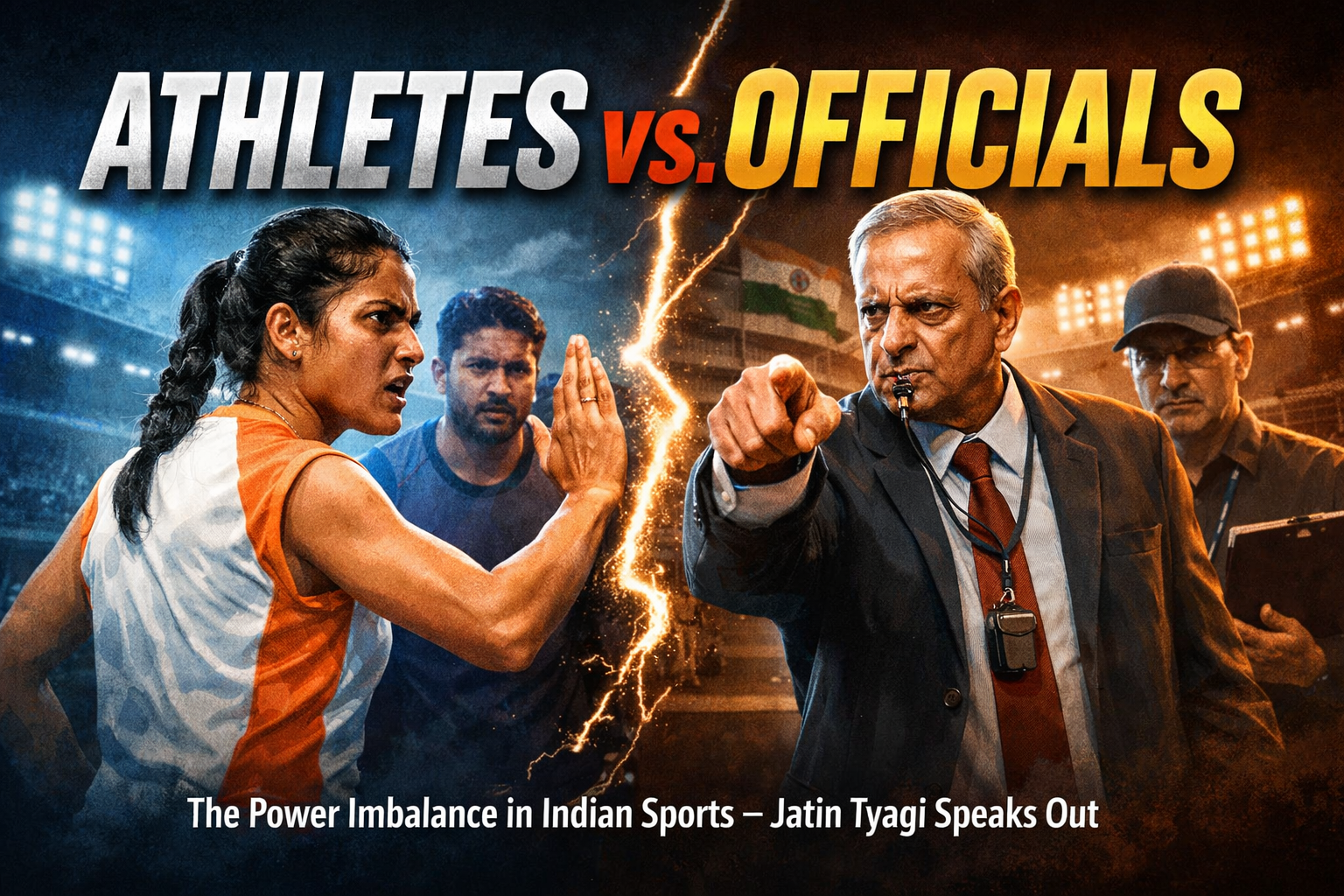
INTRODUCTION — WHEN TALENT MEETS BUREAUCRACY
India’s sporting ecosystem is rich with talent, ambition, and dreams. Yet, for many athletes, the road to success is blocked not by competition or skill, but by power imbalances with officials, selectors, and administrators.
Having played professionally and worked as a mentor and sports reformer, I have witnessed first-hand how these dynamics create frustration, demotivation, and lost potential.
This article is my personal account and analysis of the challenges athletes face when the system favours hierarchy over merit—and my vision for a fairer, more empowering Indian sports ecosystem.
VISION
“To establish a sports ecosystem in India where athletes have voice, agency, and equal opportunities, and where officials and administrators serve talent, not control it.”
MISSION
- Expose systemic power imbalances between athletes and officials.
- Advocate for transparent selection and governance processes.
- Empower athletes with knowledge, rights, and mentorship.
- Encourage accountability among sports administrators and policymakers.
THE REALITY — ATHLETES UNDER PRESSURE
Athletes often face challenges that go beyond training or competition:
- Arbitrary Selection and Decision-Making
- Selections often depend on favouritism, politics, or personal bias.
- Meritocracy is frequently compromised for connections or influence.
- Athletes feel powerless despite demonstrating superior skill.
- Limited Voice in Decision-Making
- Athletes rarely have a seat at the table in federations or committees.
- Their concerns, suggestions, and grievances are often dismissed.
- Policies are designed for administration convenience, not athlete welfare.
- Financial and Career Vulnerabilities
- Funding and sponsorships are controlled by officials.
- Athletes may face delays in stipend, scholarships, or support.
- Dependence on administrators creates a subtle form of coercion.
- Psychological and Emotional Strain
- Constant navigation of hierarchical systems leads to stress and burnout.
- Fear of retaliation discourages athletes from speaking out.
- Long-term mental health consequences are common.
- Inconsistent Governance
- Rules, criteria, and disciplinary measures vary widely.
- Accountability of officials is minimal; transparency is low.
- This lack of standardization undermines athletes’ confidence in the system.
PERSONAL REFLECTION — MY EXPERIENCES
During my football career and work as a sports reformer:
- I witnessed talented athletes denied opportunities despite exceptional performance.
- I saw promising youth intimidated into compliance, afraid to question authority.
- I personally struggled with navigating opaque selection processes and politics.
These experiences taught me that the system, not the athlete, often determines success or failure.
THE CONSEQUENCES OF POWER IMBALANCE
- Demoralized Athletes: Potential and performance are suppressed.
- Talent Drain: Many athletes quit or move abroad.
- Weak Sports Culture: Trust in federations and governance erodes.
- Missed Opportunities: India loses medals, recognition, and global competitiveness.
SOLUTIONS — LEVELING THE PLAYING FIELD
- Transparent Selection Protocols
- Objective, performance-based criteria.
- Publicly available evaluation metrics.
- Independent oversight for fairness.
- Athlete Representation in Governance
- Athlete councils or boards at national and state levels.
- Equal voice in policy-making and dispute resolution.
- Regular feedback channels for athlete welfare.
- Legal & Policy Safeguards
- Clearly defined athlete rights and grievance procedures.
- Protection from retaliation or discrimination.
- Standardized contracts and funding procedures.
- Empowerment through Education
- Educate athletes about rights, governance, and reporting mechanisms.
- Mentorship programs linking experienced athletes to younger ones.
- Encourage leadership skills and advocacy training.
- Accountability & Monitoring
- Independent committees to audit officials’ decisions.
- Performance reviews linked to transparency, fairness, and athlete feedback.
- Public reporting to build trust and credibility.
GLOBAL LESSONS — HOW OTHERS HAVE FIXED IT
Countries like Australia, Canada, and Germany have successfully addressed power imbalances:
- Athlete councils with voting rights
- Transparent, merit-based selections
- Ombudsman systems for grievances
- Regular monitoring of administrative decisions
India can adapt these practices to our local context while preserving cultural and sporting uniqueness.
PERSONAL REFLECTION — WHY I ADVOCATE FOR ATHLETES
Athletes are the lifeblood of sports; officials are enablers, not gatekeepers.
- I believe no athlete should fear authority or be silenced by bureaucracy.
- Merit, discipline, and effort should define opportunity, not hierarchy.
- My goal is to empower athletes so they can focus on performance, not politics.
QUOTE
“A true sports system elevates athletes, not authority. When talent thrives, the nation wins.” – Jatin Tyagi
CONCLUSION — TOWARDS A FAIRER INDIAN SPORTS ECOSYSTEM
The athlete-official power imbalance is a major barrier to India’s sporting success.
To transform India’s sports culture, we need:
- Transparent selection systems
- Representation of athletes in governance
- Legal safeguards and accountability
- Education and mentorship programs
By empowering athletes and ensuring fairness, India can unlock its true sporting potential.
It is time to put talent before hierarchy, merit before politics, and athletes before authority.
#JatinTyagi #AthleteEmpowerment #SportsReformIndia #LevelPlayingField #MeritInSports #FairSelection #GrassrootsSports #TransparencyInSports #YouthDevelopment #SportsReformer #Activist