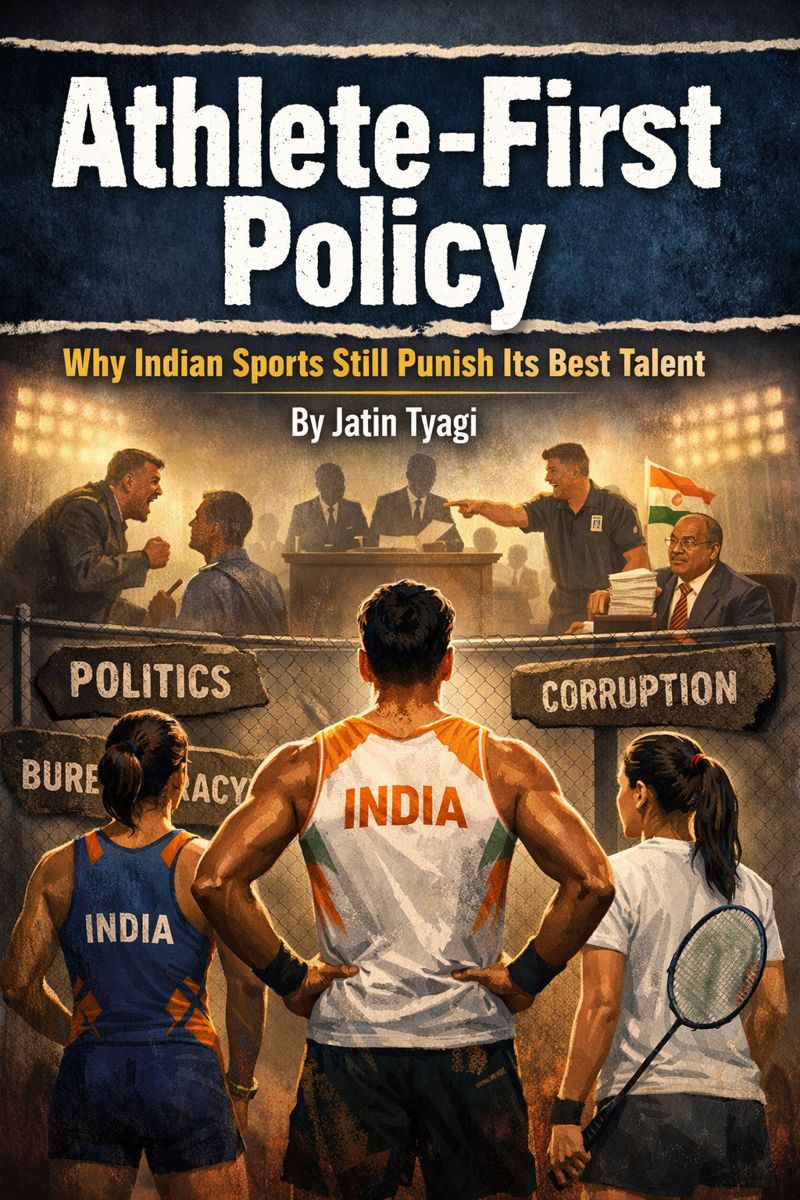
Indian sport celebrates athletes on podiums.
But away from the cameras, it often punishes the very talent it depends on.
We frequently hear the phrase “Athlete-First Policy” in official speeches, press releases, and reform documents. It sounds progressive. It sounds ethical. It sounds modern.
But for many Indian athletes, lived reality tells a different story.
In India, athletes are praised publicly — and penalized privately.
This article is not about intent.
It is about outcomes.
And the outcome, unfortunately, is clear:
Indian sport still operates in ways that discipline excellence, discourage honesty, and punish independence.
Why I Am Writing This
I write this as someone who has spent years engaging with athletes, parents, coaches, academies, and institutions. I have listened to conversations that never reach microphones.
I have heard:
- Athletes punished for questioning unfair decisions
- Players side lined after raising injury concerns
- Talented performers dropped after seeking transparency
- Careers quietly stalled without explanation
These are not exceptions.
They are patterns.
If an athlete-first policy truly existed in practice, these stories would not be so common.
What “Athlete-First” Should Mean
At its core, an athlete-first policy should ensure:
- Safety before performance
- Transparency over discretion
- Dignity over obedience
- Long-term development over short-term results
An athlete-first system protects athletes especially when it is inconvenient to do so.
But in Indian sport, the opposite often happens.
How the System Punishes Its Best Talent
- Speaking Up Is Treated as Indiscipline
Many top-performing athletes learn a harsh lesson early:
“Perform well — but don’t ask questions.”
When athletes:
- Question selection criteria
- Seek medical clarity
- Ask for rest or recovery
- Demand fair process
They are often labelled:
- Difficult
- Non-cooperative
- Attitude problems
Honesty becomes a liability.
- Performance Does Not Guarantee Protection
One would assume that consistent performers are secure.
In reality:
- High-performing athletes are often pushed harder
- Their injuries are minimized
- Their fatigue is ignored
- Their dissent is less tolerated
Excellence does not buy safety — it increases pressure.
- Injury Is Penalized, Not Protected
In an athlete-first system, injury triggers care.
In many Indian sports environments, injury triggers fear.
Athletes worry:
- Will I lose my place?
- Will someone replace me permanently?
- Will I be blamed for slowing down progress?
As a result, injuries are hidden — and careers are shortened.
- Selection Systems That Silence Talent
Selection should be objective and transparent.
Instead, many athletes face:
- Unclear criteria
- Sudden exclusions
- No written feedback
- No appeal mechanism
When talent is removed without explanation, it feels less like evaluation and more like punishment.
Why “Compliance” Is Rewarded Over Courage
Indian sport still favours:
- Obedience over independence
- Silence over honesty
- Loyalty over merit
Athletes who comply quietly are often retained longer than those who challenge unfairness — even if the latter perform better.
This creates a dangerous message:
Success is not enough. Submission is required.
Parents: Watching Talent Get Penalized
Parents often witness:
- Their child performing consistently
- Then suddenly being side lined
- With no clarity or communication
Most parents stay silent because:
- They fear retaliation
- They don’t want to harm careers
- They feel powerless
A system that intimidates parents cannot claim to be athlete-first.
Mental Health: The Hidden Punishment
Punitive systems don’t just affect careers — they affect minds.
Athletes experience:
- Anxiety
- Self-doubt
- Fear of authority
- Emotional burnout
Many internalize punishment as personal failure.
A system that harms mental health is not athlete-first — no matter what it claims.
Why This Contradiction Persists
Indian sport continues to punish talent because:
- Power is centralized
- Accountability is weak
- Grievance mechanisms lack independence
- Athlete representation is minimal
Policies exist on paper.
Power remains unchanged in practice.
This Is Not Anti-System — It Is Pro-Reform
Let me be clear.
Many officials, coaches, and administrators work sincerely.
But sincerity cannot fix structural imbalance.
A system that relies on goodwill instead of safeguards will always fail athletes.
Reform is not about attacking individuals.
It is about correcting design flaws.
My Vision: A Real Athlete-First System
I envision an Indian sports ecosystem where:
- Athlete safety is non-negotiable
- Questioning is protected, not punished
- Selection decisions are documented and reviewable
- Injuries trigger care, not fear
- Athletes have independent grievance support
- Governance includes athlete representation
An athlete-first system is not soft.
It is fair, strong, and sustainable.
What Must Change Immediately
- Clear and transparent selection criteria
- Independent medical authority
- Mandatory written feedback for de selection
- Protection for whistle-blower’s
- Mental health infrastructure
- Separation of performance goals from welfare decisions
Athletes should never have to choose between health and career.
Message to Athletes
If you feel punished for honesty, you are not alone.
Your courage to speak up:
- Is not arrogance
- Is not weakness
- Is not disloyalty
It is leadership.
Message to Coaches
True coaching means:
- Protecting athletes beyond results
- Supporting voices, not suppressing them
- Valuing long-term development
Athlete-first systems empower good coaches.
Message to Officials and Administrators
If athletes fear you, the system is already broken.
Authority should protect talent — not discipline it into silence.
Message to Policymakers
India does not need better slogans.
It needs:
- Enforceable athlete-first policies
- Independent oversight bodies
- Accountability mechanisms
Athlete welfare must be structural, not optional.
My Commitment as a Sports Reformer
As Jatin Tyagi, I commit to:
- Challenging performative athlete-first narratives
- Advocating real protections for athletes
- Amplifying voices that systems try to silence
- Pushing for governance reform
Athletes deserve systems that work for them, not against them.
A Defining Quote
“A system that punishes its best athletes for honesty is not athlete-first — it is power-first.” — Jatin Tyagi
Conclusion: Athlete-First Must Mean Action, Not Applause
Indian sport does not lack talent.
It lacks courage — the courage to shift power toward athletes.
Until athlete-first policies are enforced in reality, not just language, Indian sport will continue to lose its best talent quietly.
True reform begins when athletes no longer fear the system meant to support them.
About the Author
Jatin Tyagi is a sports reformer, activist, and social impact advocate committed to creating ethical, athlete-centered, and mentally resilient sports environments. His work emphasizes youth development, sports integrity, and lasting athlete well-being.
#AthleteFirst #SportsReformer #AthleteRights #IndianSports #EthicalSports #SportsGovernance #MentalHealthInSports #JatinTyagi #Activist #SafeSports