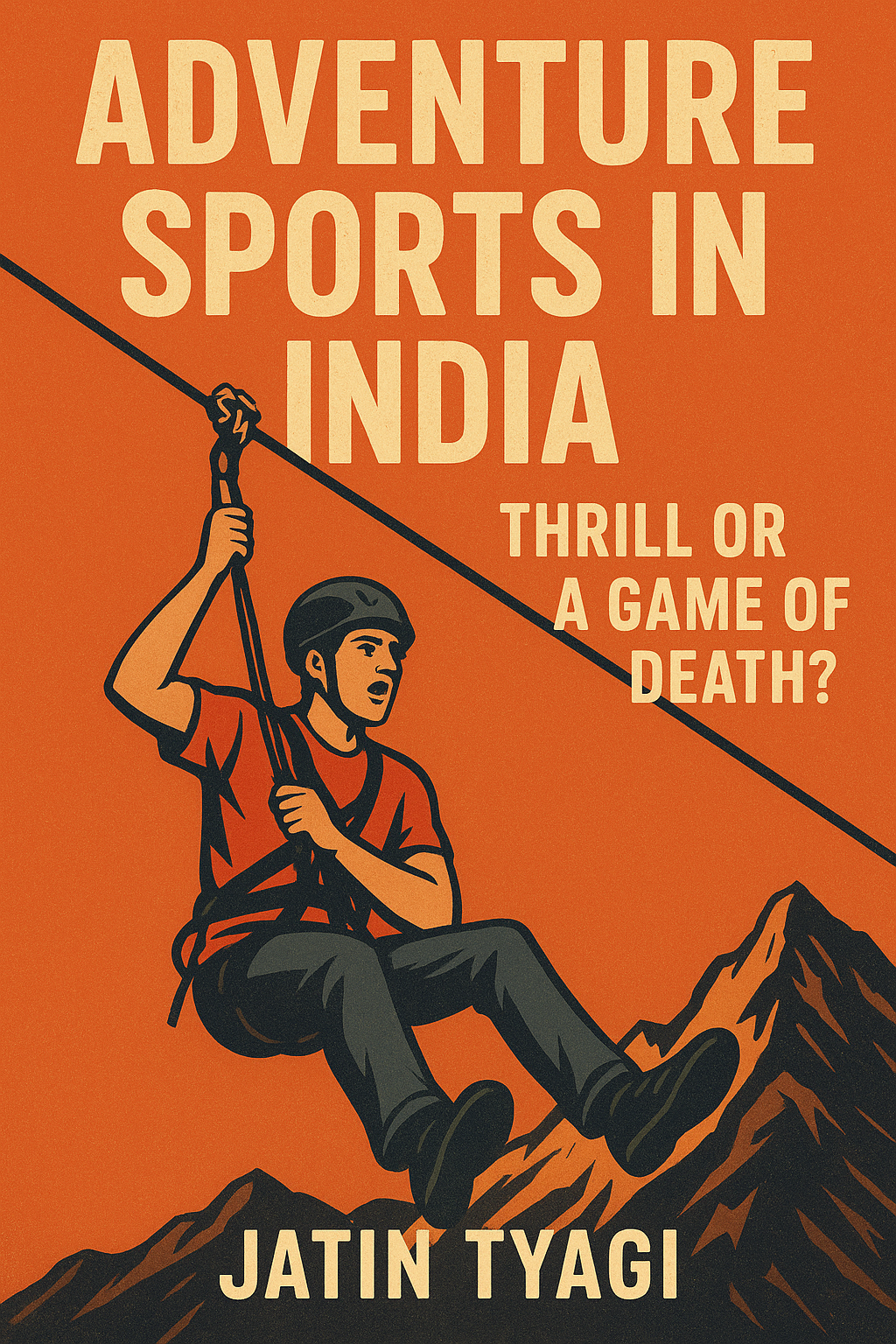
Bungee jumping, paragliding, and river rafting look breath taking on Instagram. Perfect angles, slow-mo dives, smiling faces, and hashtags like #Adventure Life. But scroll past the filters and you’ll find a much darker reality: poor safety standards, untrained operators, outdated equipment, and zero accountability.
What is marketed as adventure in India today has quietly turned into a gamble with human life?
This is not hyperbole — this is happening right now.
The Reality behind the Thrill
On January 19, 2025, 27-year-old Shivani Dable, a woman from Pune, and her allotted instructor, 26-year-old Sumal Nepali, both died during a paragliding session in Keri village, North Goa when their glider crashed into a ravine shortly after take-off. The Goa tourism department later clarified no official permission had been granted for that activity at that site. (India Today)
Just days later in Himachal Pradesh, multiple paragliding deaths occurred in Kullu and Kangra districts — adding at least seven fatalities in the past year alone — largely due to equipment failures, poor weather judgment, or unregulated operations. (The Times of India)
And in Rishikesh, Uttarakhand, a 24-year-old man named Sonu Kumar was critically injured in November 2025 when the bungee jumping cord snapped mid-air during a jump, causing him to fall onto a nearby roof. Eyewitnesses said there was no trained emergency response available on site when it happened. (The Economic Times)
These are not isolated incidents. These are patterns — repeat tragedies that have taken place over months, even years.
Numbers Don’t Lie
While there is no central registry for adventure sport accidents in India, local reports and media coverage show:
📌 At least 7 paragliding deaths in Himachal Pradesh over the past year. (The Times of India)
📌 Multiple non-permitted paragliding deaths in Goa and other states in 2025 alone. (India Today)
📌 Bungee cord failures and critical injuries in Rishikesh. (The Economic Times)
📌 River rafting fatalities and near-fatal situations continue to be reported across Uttarakhand and other rafting hotspots. (The Economic Times)
Yet despite this, no centralized mechanism exists to publish annual statistics on adventure sport deaths, making public awareness and industry reform almost impossible.
Instagram vs. Ground Reality
Social media thrives on thrills — but it rarely shows the aftermath.
A 30-second reel never shows:
✔ A snapped rope mid-jump
✔ A paraglider fall into a ravine
✔ A tourist being rushed to AIIMS with broken ribs
✔ Families receiving death notices
But these aren’t nightmares; they are news stories.
And they are happening far too often.
Adventure tourism has become a booming business in India — valued in the thousands of crores and steadily growing as domestic and international tourists seek thrill destinations. (India Today)
But growth ≠ safety.
Why This Is Happening
🔹 No Strict National Regulations
India has adventure tourism guidelines — but most are voluntary and poorly enforced. Operators often bypass them with little consequence. (The Economic Times)
🔹 Untrained Operators
Many so-called “professional guides” have no certified training, no medical first-aid skills, and no emergency response experience. They are often seasonal or part-time workers learning on the job.
🔹 Outdated or Faulty Equipment
From parachute harnesses to bungee cords and rafts, much of the gear used is not audited frequently, and often lacks safety certifications.
🔹 Zero Accountability
When tragedy strikes, blame is buried. Operators remain free. Authorities rarely initiate automatic investigations, and victims’ families must fight for justice.
This is not adventure — this is negligence dressed as adrenaline.
Stories of Loss
Shivani Dable lost her life at 27 while trying to fulfil a dream holiday moment. (India Today)
Sonu Kumar narrowly survived a bungee jump that should never have been allowed to proceed without emergency medical staff on standby. (The Economic Times)
Others have fallen from zip lines, capsized in fast-flowing rapids, or suffered harness failures mid-flight. (Outlook Traveller)
These weren’t “extreme outliers.”
They were predictable outcomes of a system that treats safety as optional.
What Must Change — Now
This is not a rejection of adventure sports. It is a rejection of:
- Unprofessional operator’s
- Seasonal, untrained guides
- Corruption in permissions
- Outdated or unchecked equipment
- Lack of emergency readiness
- Blame-burying after fatalities
Here’s what we must enforce:
- Mandatory licensing and background checks for all adventure operators
- Certified training for all guides and instructors
- Frequent third-party audits of equipment and safety gear
- Automatic government investigations into every serious accident
- Strict penalties and criminal charges for negligence
- Public reporting of accidents and safety records
Until these are implemented, adventure sports in India remain not just risky — reckless.
My Vision
I envision an India where:
- Adventure thrills — but never at the cost of life.
- Tourists are informed, protected, and confident.
- Operators are highly trained professionals.
- Safety data is publicly available.
- The law protects citizens, not profits.
This isn’t wishful thinking — it’s essential reform.
Message to Tourists and Parents
Your life is not content for someone else’s reel.
A helmet should protect — not hide a statistic.
Training should be mandatory — not optional.
Before you jump, ask:
✔ Is the operator certified?
✔ Is equipment audited recently?
✔ Are emergency teams on site?
✔ Does insurance cover this activity?
If you cannot answer these confidently — don’t do it.
Quote
“True courage isn’t choosing danger — it’s refusing to risk your life in a system that doesn’t respect it.”
— Jatin Tyagi
Conclusion
Adventure sports — when regulated, professional, and trained — can be life-affirming.
But in India today, the combination of Instagram hype, lax regulations, untrained staff, and commercial shortcuts has turned thrill into a gamble with death.
This must end.
Not next year.
Not after another headline.
Now.
Because adventure should teach us how to live —
not how to die.
#AdventureOrDeath #SafeAdventureIndia #LifeOverLikes #JatinTyagi #SportsReformer #StopRiskyAdventure #ProtectLivesNotProfit #YouthSavior #NationalYouthIcon #JTF #StopCorruption