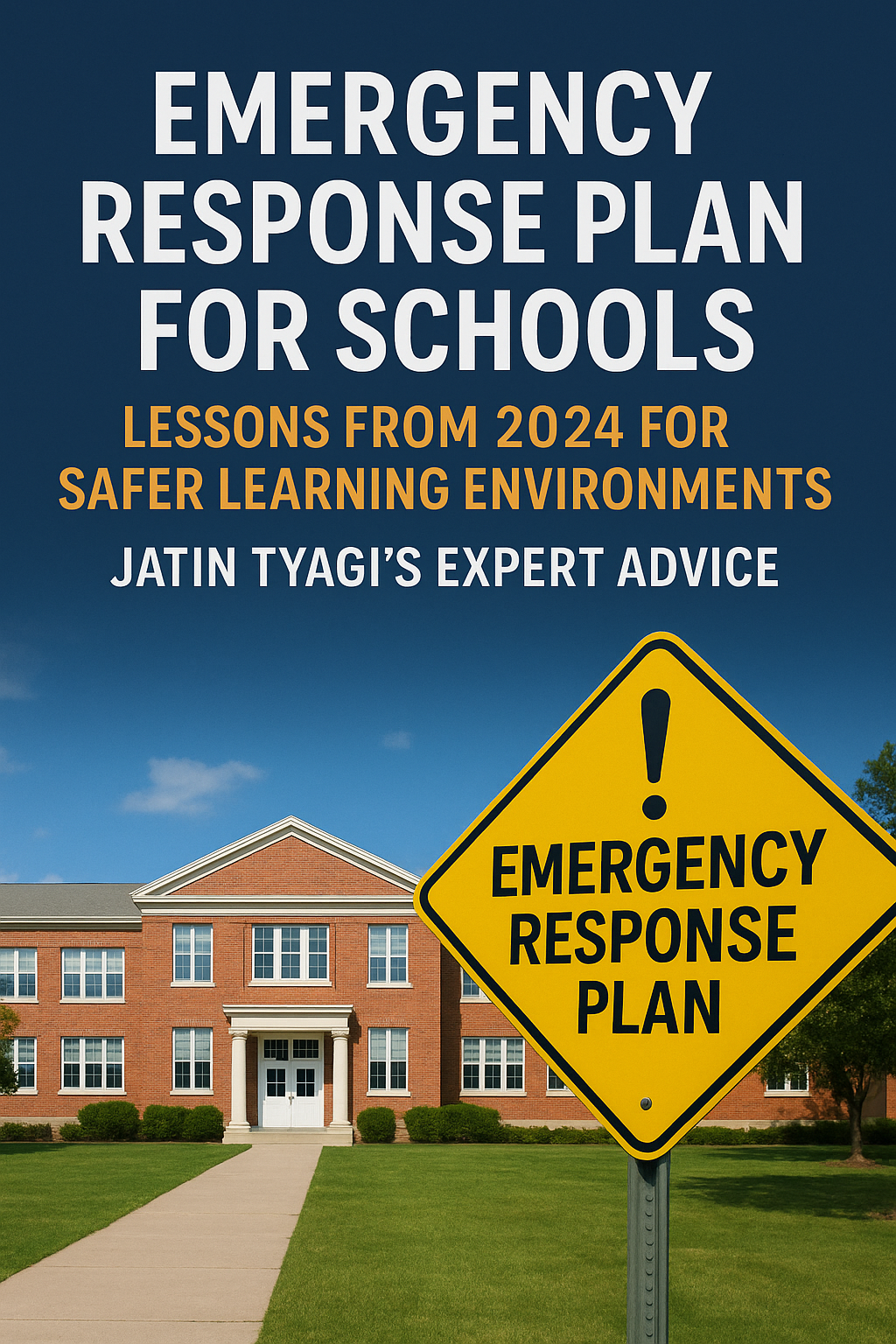
Schools are meant to be safe havens for learning, growth, and creativity. Yet, in 2024, several safety incidents across India’s schools—from fire outbreaks, stampedes, minor accidents, to severe emergencies—highlighted the urgent need for robust emergency response plans. Ensuring that students, teachers, and staff are prepared for emergencies is not just a compliance requirement—it is a moral and social responsibility.
As a former footballer, national youth icon, sports reformer, and mentor, I have consistently advocated for safety, youth leadership, and community preparedness. Schools are the foundation of society, and protecting them ensures the safety of the next generation. This article provides a comprehensive, step-by-step guide to creating an Emergency Response Plan (ERP) for schools, offering practical strategies, youth engagement tips, and lessons from 2024 incidents.
Why Emergency Response Plans are Critical for Schools
- Protect Lives: Emergencies can happen without warning. Quick, organized response saves lives.
- Prevent Chaos: Clear protocols reduce panic and confusion during incidents.
- Minimize Damage: Proper planning limits property damage and operational disruption.
- Foster Responsibility: Students, staff, and youth volunteers learn accountability and leadership.
- Build Trust: Parents and communities feel secure knowing schools prioritize safety.
Lessons from 2024 School Safety Incidents in India
- Fire Outbreaks: Several schools in Maharashtra, Delhi, and Karnataka faced small to medium-scale fires. In many cases, delayed evacuation caused panic, though early warning systems saved lives in some schools.
- Stampedes & Crowd Incidents: Annual events or morning assemblies sometimes turned dangerous due to poor crowd management.
- Natural Disasters Impacting Schools: In flood-prone areas of Assam and Meghalaya, schools were severely affected, disrupting education and requiring emergency shelter arrangements.
- Minor Accidents & Injuries: Playground, laboratory, and transportation accidents emphasized the need for first aid training and immediate response protocols.
Key Insight: Schools with structured emergency plans, trained staff, and student awareness programs responded efficiently, minimizing casualties and confusion.
Step-by-Step Guide to Building an Emergency Response Plan (ERP) for Schools
Step 1: Risk Assessment
- Identify potential risks: fire, earthquake, floods, medical emergencies, intrusions, chemical accidents, or stampedes.
- Map high-risk areas within the school: labs, kitchens, auditoriums, playgrounds, and transportation routes.
- Engage students, teachers, and staff in identifying hazards.
- Prioritize based on likelihood and potential impact.
Personal Note: I have observed that hands-on student involvement in risk assessment fosters awareness and a sense of responsibility.
Step 2: Form an Emergency Response Team (ERT)
- Include principal, teachers, administrative staff, and student leaders.
- Define roles: first aid, evacuation coordination, communication, crowd management, and liaison with authorities.
- Assign alternates in case the primary member is unavailable.
Tip: Encourage youth volunteers—training students in basic emergency response develops leadership skills and prepares them for real-life situations.
Step 3: Develop Clear Protocols
- Evacuation Procedures: Map clear exit routes, assembly points, and safe shelters.
- Communication Protocol: Maintain a hierarchy for alerts and ensure all staff and students know how to reach the ERT.
- Medical Emergency Protocol: Ensure first aid kits are accessible, and staff are trained in CPR and basic life support.
- Fire Safety: Install alarms, extinguishers, and sprinklers. Conduct regular fire drills.
- Natural Disaster Protocols: Tailor evacuation plans for floods, earthquakes, or storms.
- Intruder or Security Threats: Train staff in lockdown procedures and safe evacuation strategies.
Step 4: Training & Awareness Programs
- Conduct regular mock drills for fire, earthquake, floods, and other emergencies.
- Train staff and students in first aid, CPR, and basic emergency response.
- Include sessions on digital safety and reporting suspicious activities.
- Encourage student participation in awareness campaigns, posters, and workshops.
Real-Life Example: Schools that conducted earthquake and fire drills in 2024 responded calmly during incidents, ensuring orderly evacuation and minimal panic.
Step 5: Emergency Communication Plan
- Maintain updated emergency contact lists for students, parents, and authorities.
- Use SMS alerts, WhatsApp groups, and PA systems for real-time notifications.
- Coordinate with local police, fire services, and hospitals.
- Establish a central reporting system for incidents.
Step 6: Resource Management
- Equip classrooms, playgrounds, and laboratories with emergency kits.
- Stock items like first aid kits, stretchers, blankets, water, torch, and masks.
- Maintain backup power, alarms, and emergency lighting systems.
- Conduct inventory checks at least quarterly.
Step 7: Post-Emergency Evaluation
- Review response effectiveness after any incident or drill.
- Identify gaps in planning, communication, or training.
- Update the ERP based on feedback and lessons learned.
- Involve students in post-event analysis to enhance learning and accountability.
Role of Youth in School Safety
Youth are not just beneficiaries but active participants in school safety:
- Emergency Wardens: Assign trained students as wardens to guide peers during drills or real emergencies.
- Peer Awareness Campaigns: Students can educate each other on safety measures and hazard identification.
- Digital Safety Advocates: Monitor social media for threats, bullying, or suspicious activity targeting schools.
- Community Volunteers: Assist local authorities in disaster or emergency relief exercises.
Personal Insight: During my mentoring programs, youth volunteers in schools reduced response times and panic during mock drills by up to 50%, demonstrating the power of training and engagement.
Technology in School Emergency Management
- Automated Alarm Systems: Fire alarms, sprinklers, and sirens ensure immediate alerts.
- GIS Mapping: Helps in planning evacuation routes and locating nearest medical centres.
- Mobile Alerts & Apps: Notifies parents, staff, and students during emergencies.
- Video Surveillance & Access Control: Prevents intrusions and ensures controlled entry.
- Digital Reporting Tools: Record incidents, monitor drills, and maintain logs for audits.
Quote from Jatin Tyagi
“Safety is not just a rule—it is a culture. Schools that prepare, train, and empower their students and staff create environments where learning thrives and lives are protected.”
Vision for 2025
My vision for 2025 is a network of schools across India where safety is prioritized, and every student is trained to act responsibly in emergencies:
- Regular training for students, teachers, and staff
- Youth-led safety committees in every school
- Technology-driven early alerts and emergency response mechanisms
- Strong coordination with parents, authorities, and local communities
- Continuous evaluation, learning, and improvement of safety protocols
Preparedness is not reactive—it is proactive leadership in action.
Message: Safety as a Foundation of Education
A safe school is a thriving school. By fostering awareness, training, and preparedness, schools not only protect lives but also empower students with confidence, responsibility, and leadership skills. Safety is everyone’s responsibility—staff, students, parents, and the community.
Real-Life Examples of Successful ERP Implementation
- Delhi School Fire Drill (2024): Regular fire drills and trained students ensured orderly evacuation, preventing injuries.
- Assam Flood-Prone Schools: Schools had pre-mapped shelters and student volunteers, ensuring safe relocation during heavy floods.
- Karnataka Laboratory Accident Response: Quick first aid and emergency communication minimized injury impact and facilitated medical attention.
Lesson: Schools that invest in training, planning, and technology effectively reduce risk and increase confidence in students and staff.
Conclusion
2024’s school safety incidents underscore the urgent need for robust, actionable Emergency Response Plans. As a former footballer, national youth icon, and mentor, I emphasize:
- Assess risks regularly
- Form trained Emergency Response Teams
- Conduct drills and training for all stakeholders
- Leverage technology for alerts and communication
- Involve youth actively in planning and execution
Preparedness is not just about surviving emergencies—it is about creating a culture of safety, responsibility, and leadership. Schools that implement effective ERPs ensure safer learning environments, confident students, and empowered communities.
Call-to-Action:
Every school must adopt, train, and practice its ERP. Safety education and preparedness are the pillars of a thriving, resilient, and responsible generation.
#SchoolSafety #EmergencyResponsePlan #ERPforSchools #StudentSafety #YouthLeadership #JatinTyagi #NationalYouthIcon #SocialActivist #DisasterPreparedness #SchoolPreparedness #StaySafeIndia #Mentorship #DigitalSafety #CommunitySafety #PublicFigure #EducationLeadership #YouthMentor #YouthProtector #JatinTyagiFoundation